THE GREAT MIGRATION
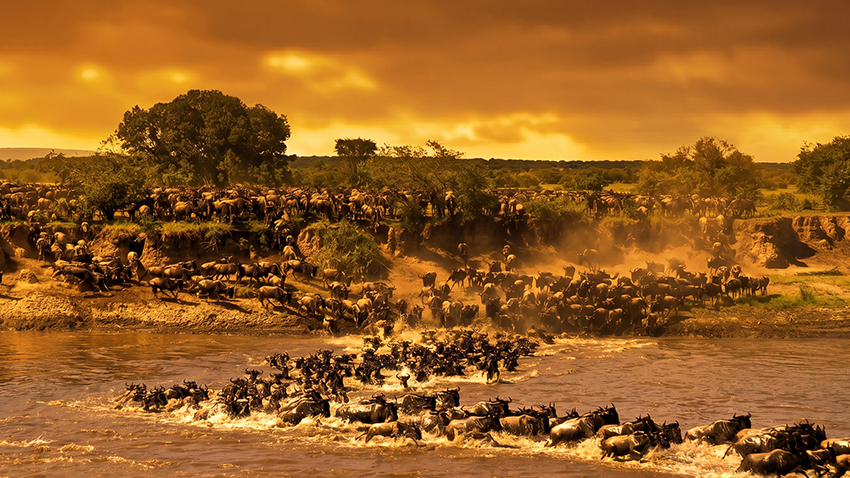
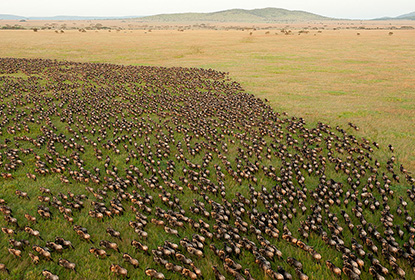
The Great Wildebeest Migration is one of the most extraordinary natural events on Earth, unfolding across the vast plains of Tanzania’s Serengeti and Kenya’s Maasai Mara. Each year, over two million wildebeest, accompanied by hundreds of thousands of zebras and gazelles, move in a continuous cycle driven by the search for fresh grazing and water. This journey is not a single one-time movement but a year-round migration, shaped by seasonal rains and the rhythm of the land.
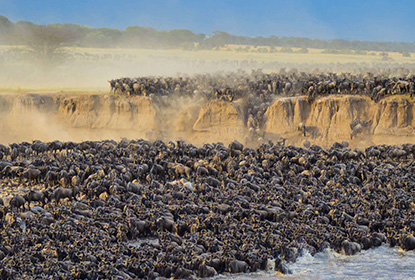
As the herds travel, they face countless challenges that make the migration both dramatic and awe-inspiring. One of the most iconic moments is the river crossing, where wildebeest plunge into crocodile-infested waters like the Grumeti and Mara Rivers. Predators such as lions, hyenas, and cheetahs also follow closely, taking advantage of the vulnerable animals along the way. Despite these dangers, the instinct to move forward remains strong, ensuring the survival of the species and maintaining the balance of the ecosystem.
Beyond its sheer scale and intensity, the migration plays a crucial role in sustaining the environment. The movement of the herds helps fertilize the soil, supports plant growth, and provides food for a wide range of wildlife. For travelers and nature lovers, witnessing this phenomenon is a once in a lifetime experience an opportunity to see nature in its purest, most powerful form, where life, survival, and beauty exist in perfect harmony.
Conclusion
In conclusion, the Great Wildebeest Migration stands as a powerful testament to the rhythm and resilience of nature. It is more than just a movement of animals it is a living cycle of survival, renewal, and balance that sustains an entire ecosystem. For those who witness it, the experience leaves a lasting impression, offering a rare glimpse into one of the world’s most breathtaking and untamed natural wonders.